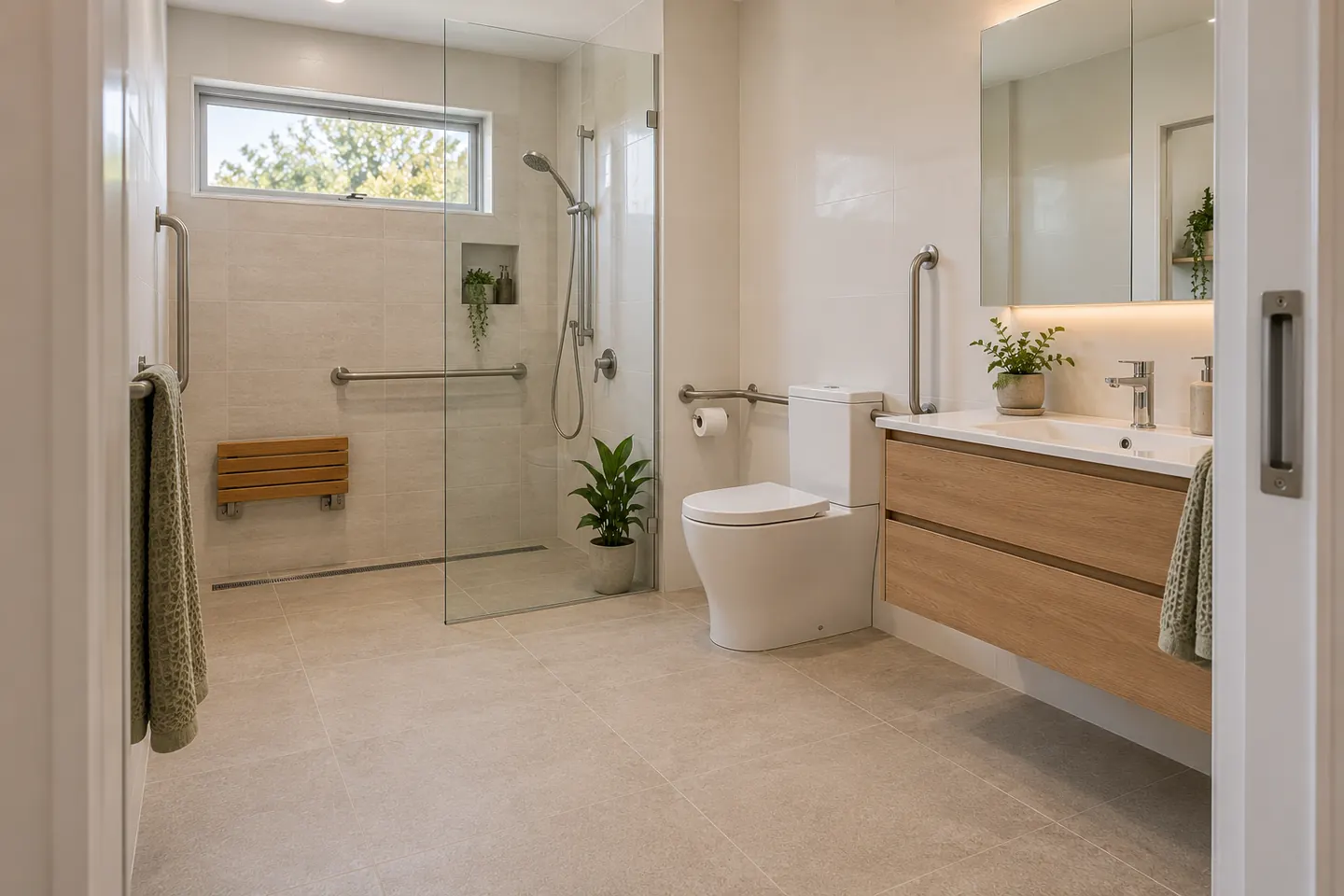
Who this is for
- People planning to stay in their home as they get older
- Families looking after a parent who's moved in
- Anyone recovering from surgery or injury
- People living with a disability who need a bathroom that works for them
- Owners who just want a bathroom that's easier and safer for everyone
In a lot of Wollongong suburbs — Figtree, Dapto, Unanderra, Berkeley, Corrimal — people have been in the same house for decades and want to stay. The bathroom is usually what makes that hard.
What makes a bathroom easier to use
Step-free shower
No hob, no shower base lip, no step. The floor falls gently to a drain, usually a linear drain along one wall. This is the single biggest improvement for anyone with mobility issues and it's useful for everyone.
Blocking in the walls
Timber noggings or a structural backing sheet behind the tiles, in the right places: beside the toilet, in the shower, next to the bath if there is one. Even if you don't want rails now, having the blocking means they can go in later without pulling tiles off.
Non-slip floors
A matt or textured tile with a slip rating suited to wet bare feet. Especially in the shower and at the doorway.
A comfort-height toilet
A little higher than standard, easier to sit on and get up from.
Lever taps and a handheld shower
Levers are easier on stiff or sore hands than twist taps. A handheld shower on a sliding rail lets people shower seated.
Space and doors
Where possible, a wider doorway and a door that opens outward or slides, so someone who falls inside doesn't block the door.
Good lighting
Bright, even light without glare, and a night light or a sensor light for trips to the toilet at night.
A seat in the shower
A fold-down shower seat, fixed to a properly blocked wall, or space for a freestanding shower chair.
Doing it without the clinical look
- Grab rails in finishes that match the tapware, such as chrome, brushed nickel or matt black
- Warm, textured floor tiles instead of institutional vinyl
- Timber-look vanities and good mirrors
- A frameless glass panel that can be removed later if a carer needs more room
Most visitors wouldn't pick it as an accessible bathroom.
Local houses and what they need
Brick veneer on a slab (Figtree, Dapto, Unanderra). Step-free showers mean recessing part of the slab or building up the rest of the floor with a gentle ramp at the door. It's very achievable, but it's a specific line in the quote.
Timber floors in older cottages (Corrimal, Woonona, Bulli). Joists can often be lowered or adjusted to create the fall for a step-free shower. The subfloor gets checked for rot while it's open.
Units. A step-free shower in an apartment depends on the slab and the existing waste. Strata approval is needed where waterproofing is replaced.
Asbestos in older homes
Plenty of the homes where people want to age in place are older, and may have fibro in the bathroom. Testing happens before strip-out, and any removal is by a licensed removalist.
If there's funding involved
Some people have a home modification funded through an aged care or disability support program. Those programs often need an occupational therapist's report, particular specifications and their own approval before work can begin. Sort out what the funder needs first, then get the quote to match.
Planning ahead
If nobody in the house needs an accessible bathroom yet, the cheap stuff is still worth doing during any renovation:
- Blocking in the walls
- A step-free shower
- A non-slip floor
- Lever tapware
It adds very little to the job and saves a second renovation later.
Living in the house during the work
This is the tricky bit for a lot of families. If the person the bathroom's being built for is the one who most needs a working shower, going without for four or five weeks isn't a small thing.
Options people use:
- A short stay with family during the wet stages
- Respite or short-term care arranged in advance, where that's already part of the support plan
- A second bathroom or toilet in the house, even if it's not ideal, to cover the gap
- Staging the work so the toilet stays usable for as long as possible
Talk it through at the measure. The program can often be shuffled so the hardest days are grouped together.
Time on site
Four to five weeks is typical, a bit more if walls or doorways are being moved.
The builder
Renovation work is carried out in partnership with Coastal Renovation Group, a licensed NSW builder. Licence and insurance details are provided on request. See prices for 2026 bands, or full bathroom renovations for the general process.
Call 02 4214 4073 or send the bathroom details through.
Questions people ask before they commit
What does an accessible bathroom renovation cost in Wollongong?
As a 2026 guide, most accessible bathroom renovations run $22,000 to $38,000. Rooms that need walls moved for wider doors or wheelchair turning space cost more than a straight swap to a step-free shower.
Can grab rails be added later?
They can, but they need something solid behind them. Putting timber blocking or a structural backing sheet in the walls during a renovation costs very little and means rails can go exactly where they're needed, whenever they're needed.
Does funding change how an accessible bathroom is renovated?
If a funding body is involved, such as an aged care or disability support program, it may need an occupational therapist's assessment and specific approvals before work starts. Check the funding requirements before booking the job.